-
How the Machine Compiles, Measures, and Fails to Read the Human Body
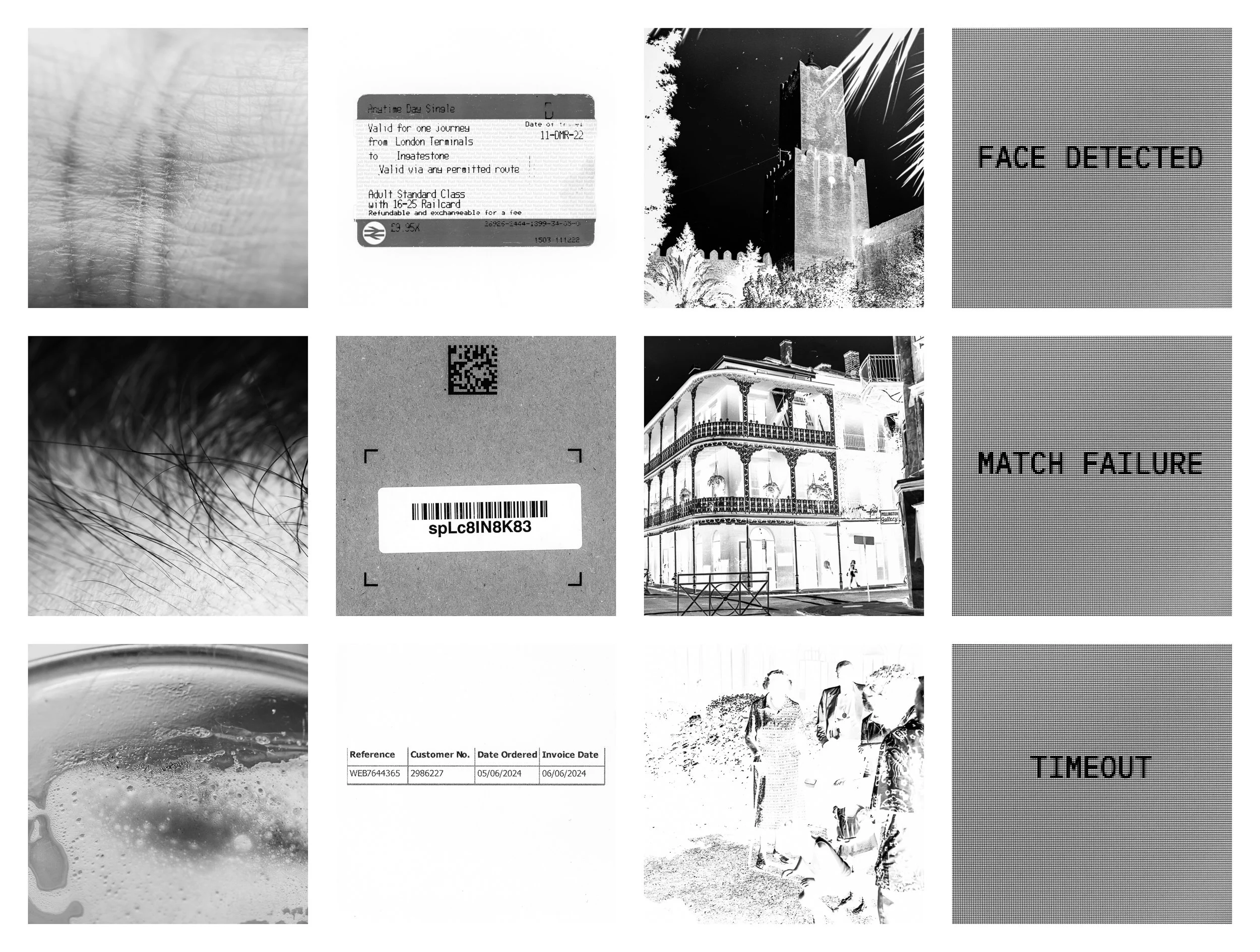
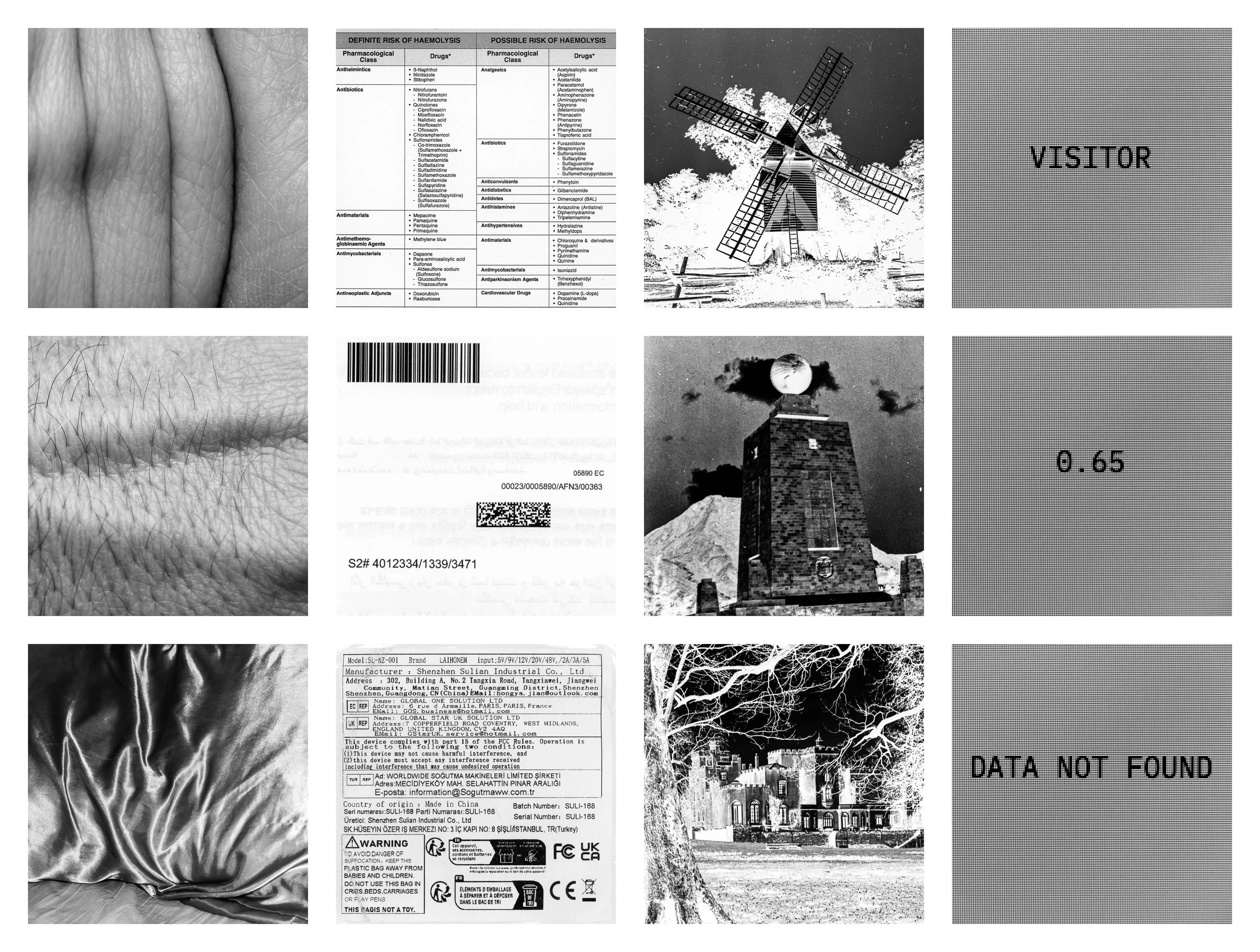
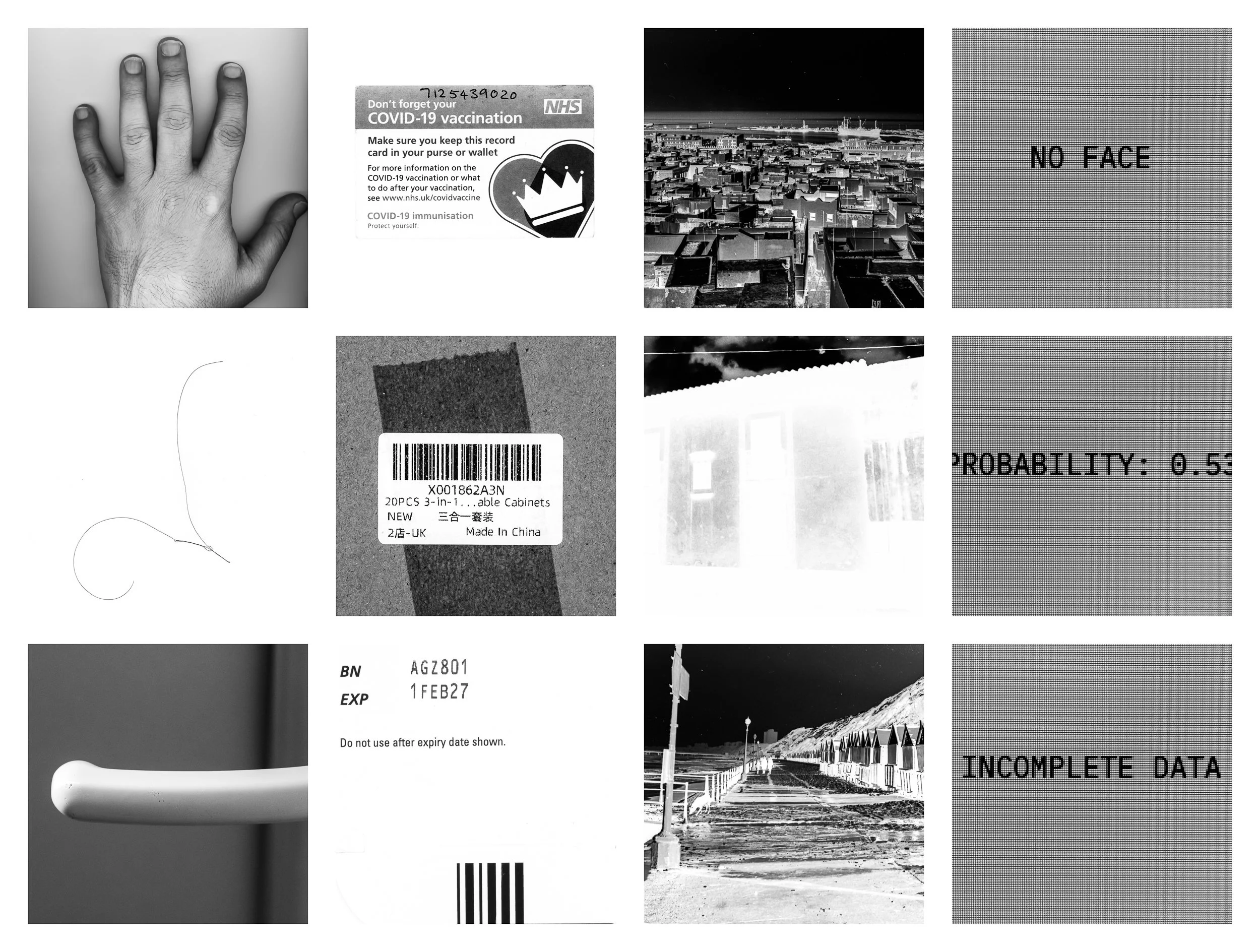
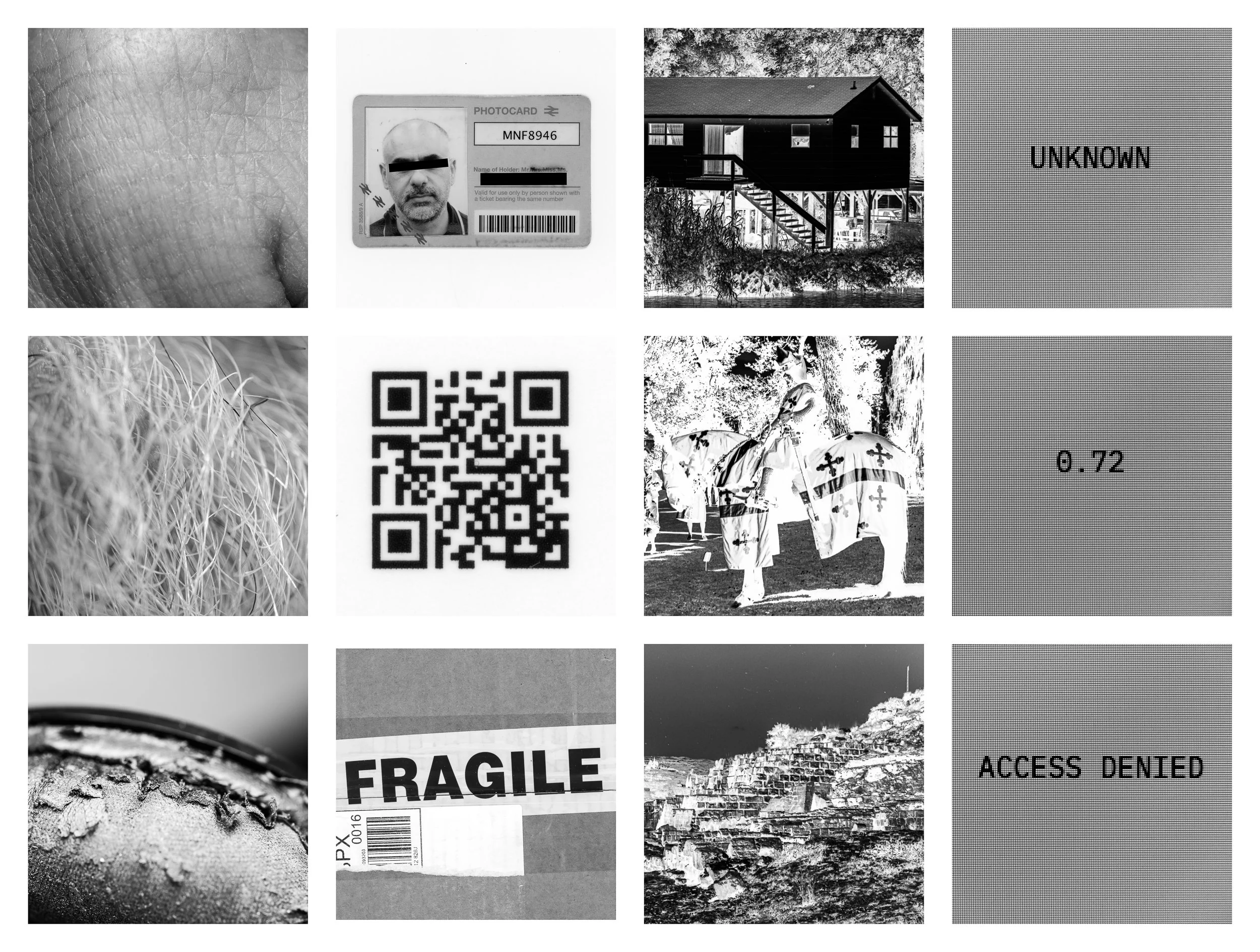
This project explores the collapse of human identity within modern tracking and biometric control systems. The project rejects photography as a psychological portrait, treating the individual not as a subject, but as a collection of discarded traces processed by a server.
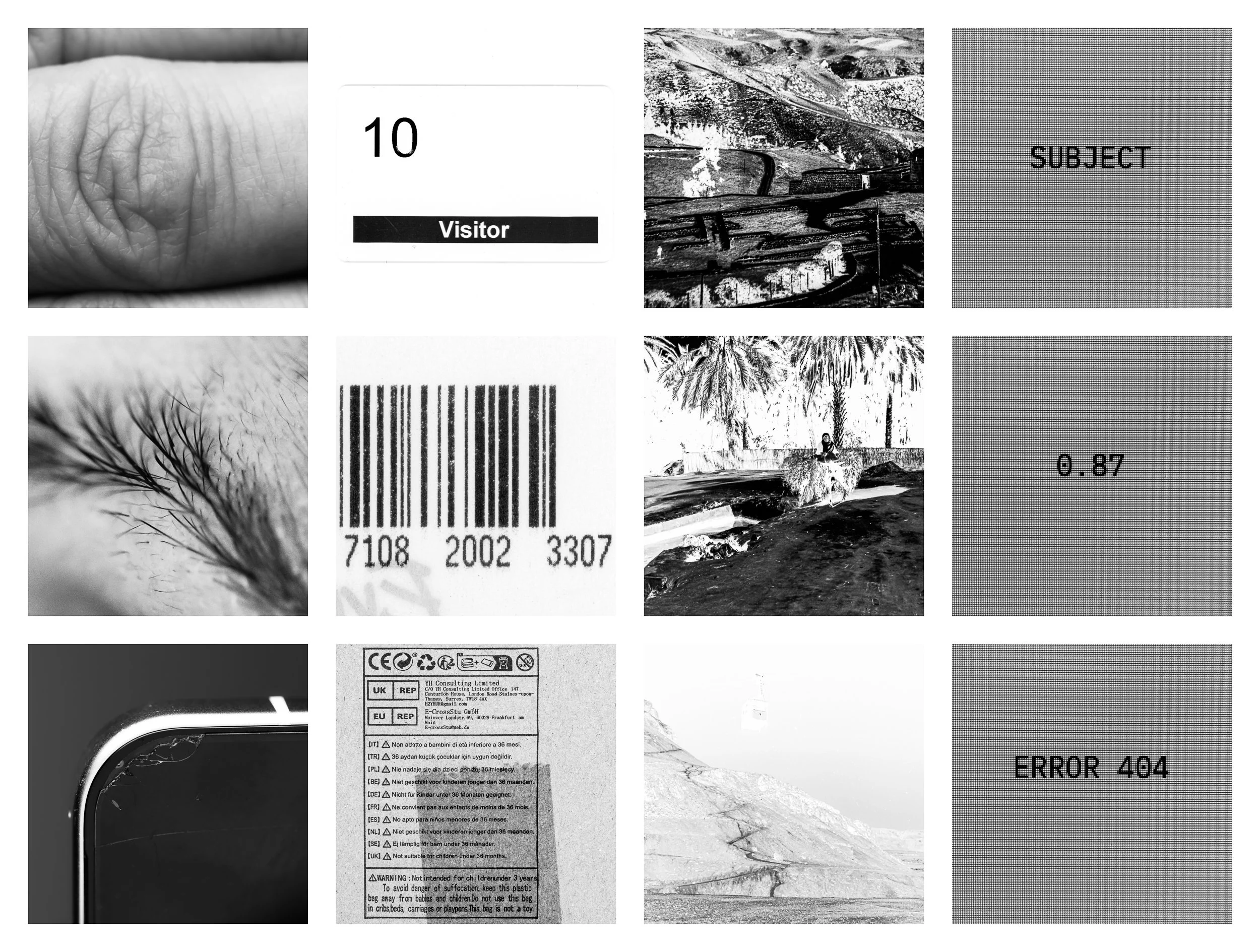
The work operates through a strict grid-based protocol (10 plates divided into 4 columns) in which biologically incompatible forms of data are forced to coexist within the same visual space:
The Biological Index: macro details of skin, hair, and fingerprints. The raw and chaotic matter of the human body.
The Administrative Token: barcodes, train tickets, health cards, and logistical labels. The reduction of the individual to a user, a data stream, or a commodity.
The Operational Space: landscapes and architectures inverted into digital negatives, stripped of any geometric lyricism and transformed into surveillance maps ready for machine calculation.
The System Log: the screen output recording the processing state (SYSTEM FAILURE, LOW CONFIDENCE, ERROR 404).
The constant appearance of errors, timeouts, and failure states in the final column is not just a simple data point, but the political core of the work. When the software goes into buffer overflow, it reveals the machine's intrinsic inability to normalize and digest the biological chaos of the human being.
Each plate thus becomes a systematic ledger: the visual chronicle of a system that attempts to measure the human, and crashes.